
admin_dhondt

30 June 2026

No Comments

> THE RIGHT TO BE FORGOTTEN IN BELGIUM (IN RELATION TO ILLNESS & INSURANCE)

> THE RIGHT TO BE FORGOTTEN IN BELGIUM (IN RELATION TO ILLNESS & INSURANCE)

The right to be forgotten in Belgium (in relation to illness and insurance)

Het Recht om Vergeten te Worden in België (bij ziekte & verzekeringen)

What is it?

The right to be forgotten aims to help people who have had a serious illness, such as cancer or a chronic condition, gain easier access to certain types of insurance. It concerns a legal framework that prohibits insurers to continue using past health issues as a reason to refuse someone or charge them a higher premium.


The legal framework stipulates that insurers, under certain conditions, are no longer allowed to take a past illness into account when assessing an insurance application. This does not only apply to cancer, but also to other chronic conditions, such as HIV, hepatitis, cystic fibrosis, etc.


People who benefit from this right not only pay less for their insurance, but they can also no longer be refused.


When was it introduced??

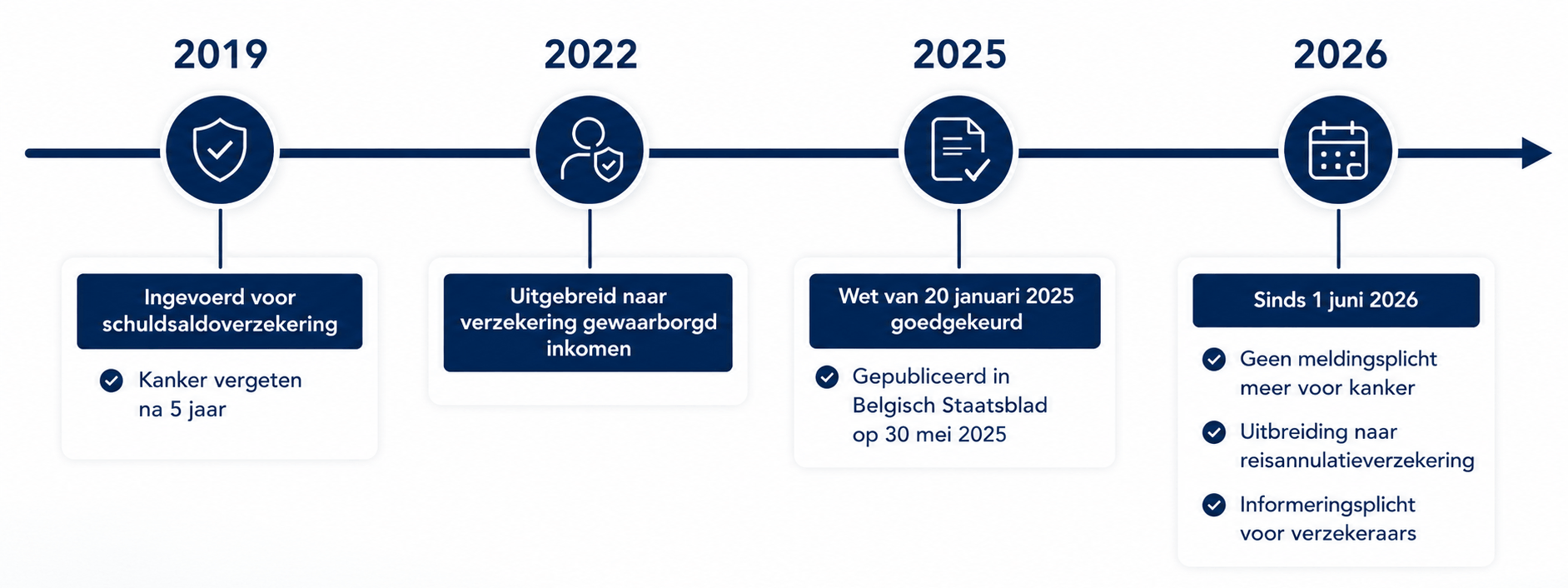
The right to be forgotten has existed since 2019 for taking out mortgage balance insurance. Previously, people with a chronic condition or cancer survivors often faced difficulties obtaining this type of insurance or were required to pay significantly higher premiums. Since 2019, however, insurers have no longer been allowed to take into account medical conditions for which treatment has been successfully completed when assessing the insurance risk.


Since 2022, the right to be forgotten has also applied to guaranteed income insurance.


How does the scheme work today?

There is an important distinction between cancer and chronic conditions:


  • Cancer: the obligation to disclose no longer applies once a person has been cancer-free for at least five years, provided there has been no recurrence during that period. For certain types of cancer, even shorter waiting periods apply.
  • Chronic conditions: the obligation to disclose remains in place. However, insurers may not determine the impact of the condition at their own discretion. Instead, they must comply with a legally established reference grid that sets the maximum premium surcharges and applicable conditions.


Since 1 June 2026, cancer survivors who meet the legal conditions are no longer required to disclose their previous cancer when applying for insurance.
What changed on 1 June 2026?

The Act of 20 January 2025 further expanded the right to be forgotten. It amends the Insurance Act of 4 April 2014 and entered into force on 1 June 2026 .

The expansion offers three key benefits:


1. No disclosure obligation for certain cancer survivors

People who have remained cancer-free for five years after completing their treatment are no longer required to disclose their previous cancer when applying for insurance. This provides the strongest guarantee that insurers will no longer take that past condition into account. In addition, certain types of cancer and chronic conditions may qualify for shorter waiting periods under a Royal Decree. For example, the waiting period is one year for certain types of breast and skin cancer, and three years for certain types of thyroid cancer.


2. Extension to travel cancellation insurance

Since 1 June 2026, the right to be forgotten has also applied to travel cancellation insurance. Insurers may no longer use a previous illness as a reason to refuse coverage if the insured person can demonstrate that their health condition was stable at the time the trip was booked.


3. Information obligation for insurers

Insurers are now required to inform prospective policyholders about the right to be forgotten. Any disputes may be submitted to the Monitoring Office, which consists of an equal number of representatives from the insurance sector, patient organisations, and consumer organisations. The Office's intervention is free of charge.


If you have any questions about the right to be forgotten or its impact on your insurance, the brokers at D’hondt Insurance are here to help. We provide personalised advice and guide you in finding an insurance solution that best suits your individual circumstances. This legislation offers additional protection and new opportunities for people with a medical history.

> Contact us

Share this article:

EN